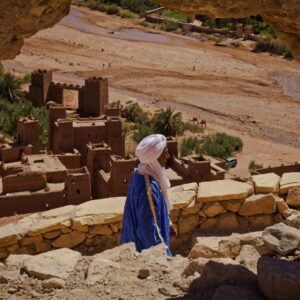
A Northern Morocco itinerary can take you from Casablanca’s Atlantic waterfront to the blue lanes of Chefchaouen in six days. The useful planning choice is where to sleep. One night in Rabat, two in Tangier and two in Chefchaouen make space for both coast and mountains, with enough time in the blue city after most day visitors have left.
Suggested route: Casablanca → Rabat → Asilah → Tangier → Tétouan → Chefchaouen. Choose Tangier as your onward gateway if its connections suit you, or continue to Fes if you have additional days. This six-day outline starts in Casablanca and assumes Day 6 is an onward travel day.
- Northern Morocco in six days
- Day-by-day route from Casablanca to Chefchaouen
- How to add heritage or extend the route inland
- Train, driver or a combination?
- How to compare northern Morocco tour plans
- Frequently asked questions
Northern Morocco in six days
| Day | Main plan | Overnight |
|---|---|---|
| 1 | Arrive in Casablanca, then continue to Rabat if the timing works | Rabat |
| 2 | Walk through part of historic Rabat and stop in Asilah en route to Tangier | Tangier |
| 3 | Explore Tangier’s kasbah, medina and waterfront | Tangier |
| 4 | Visit Tétouan on the way into the Rif | Chefchaouen |
| 5 | Spend a full day in Chefchaouen | Chefchaouen |
| 6 | Continue toward Tangier, Fes or your next destination | Onward travel |
The table is a planning outline. Ask for realistic transfer times on your dates, including the time from the vehicle drop-off to your accommodation. Some riads sit on pedestrian lanes or at the top of a slope. If you arrive by train and leave by car, give both transport providers the same hotel meeting point to avoid unnecessary transfers.
Day-by-day route from Casablanca to Chefchaouen
Day 1: Casablanca arrival and Rabat
If your flight lands early and you want one main sight in Casablanca, visit the Hassan II Mosque. A daytime visit inside depends on the visitor schedule and your actual airport arrival. Verify the tour time and treat the transfer to Rabat as the only other commitment for the day. Hassan II Mosque Foundation visitor information.
If you land late, sleep in Casablanca. You can still do the northern route by using Rabat as a stop the next day and going directly to Tangier afterward, but choose either a longer visit in Rabat or a short visit in Asilah. Keeping both visits substantial on the same day gives you less time on foot and a later hotel arrival.
Day 2: Rabat, Asilah and the road to Tangier
Start in the Kasbah of the Udayas, where the historic lanes and the outlook towards the mouth of the Bou Regreg make a manageable first walk. If you also choose Hassan Tower and its surroundings, arrange them as a separate stop. One of the pleasures of Rabat is seeing old and newer parts of the city side by side. UNESCO’s Rabat World Heritage listing.
In Asilah, keep the visit simple. Walk through a section of the medina, look for painted walls along the route and leave time for the Atlantic-facing ramparts if accessible. Treat lunch and parking as part of the stop. If you reach Asilah later than planned or want a fuller visit, stay there for the night and use the following morning for the short onward leg to Tangier.
Day 3: Tangier without a transfer
Choose a starting point at the kasbah or the lower medina depending on your mobility and the direction you want to walk. The old city has slopes, steps and uneven lanes. A guide can help you choose a route that descends towards the waterfront and finishes near a recognizable pickup point. If you prefer to walk independently, ask your hotel to mark your return route before you leave.
Cap Spartel and the city are best treated as separate parts of the day. Give the medina enough time first and add the coastal drive if the weather and your interests make it worthwhile. Readers more interested in Tangier’s public spaces can alternate a medina walk with a slower afternoon on the waterfront. Moroccan National Tourism Office guide to Tangier.
Day 4: Tétouan and Chefchaouen
Use Tétouan as the main stop between Tangier and Chefchaouen. Its UNESCO-listed medina is a useful place to explore northern Morocco’s links with Andalusia. Look at the layout of streets, doors and courtyards with a guide if architectural history matters to you. A guided walk with one or two specific stops is easier to pace than a list of shops and monuments. UNESCO’s listing for the Medina of Tétouan.
Continue to Chefchaouen before it gets late so you can find your guesthouse and take an initial walk around Plaza Uta el-Hammam. Ask where your luggage can be unloaded. If you prefer fewer stairs, choose your accommodation by its actual approach from the road. A pin in the centre of the medina says little about the slope or the route with a suitcase.
Day 5: A full day in Chefchaouen
Begin with a slow loop through the medina. The quieter parts of the morning are a good time to notice painted doors, the shape of the lanes and the way the buildings climb the hillside. Keep doors and stairs clear when you stop to photograph and ask permission before taking someone’s picture. The town is a place where people live and work. Moroccan National Tourism Office guide to Chefchaouen.
Choose an afternoon around your energy level. You can stay close to the main square, walk towards Ras El Maa or look for a higher viewpoint if the weather, path and daylight suit you. Pack some time for a café or a longer lunch. If someone in the group wants fewer stairs, make the lower medina the shared visit and treat any climb as optional.
Day 6: Leave room for your actual departure
If you are taking a flight or ferry, build the day around the departure and confirm the exact airport or terminal name. If you are continuing inland towards Fes, treat it as a transfer with one comfortable stop and plan the Fes medina for another morning. If the onward journey leaves you a spare night, you can decide whether to use it for a less rushed final departure or a cultural visit inland.
How to add heritage or extend the route inland
If family history is part of your trip, identify the city or community you want to learn about before choosing the number of stops. A place you can actually visit, with an appointment if required, is more valuable than several addresses on a map. Casablanca’s Museum of Moroccan Judaism offers one starting point, while a focused guide can help you plan visits in other cities. Museum of Moroccan Judaism.
For a trip built around Jewish heritage, Jewish Morocco Tours describes synagogue, mellah and family-history itineraries. Share the towns, family names or types of sites that matter to you, and confirm access, photography and any requirements around Shabbat or kosher meals before finalizing your route.
Fes is a logical next stage if you have more time and want a very different medina experience. If you also want a night in the Sahara, treat it as a separate extension with its own days and overnight stops. Trek Morocco Desert lists several starting cities, including Tangier and Fes, which helps when comparing ways to continue south.
Train, driver or a combination?
The Atlantic stretch and the inland stretch have different logistics. For the Atlantic cities, compare rail timings for your actual day and the door-to-door cost once station transfers are included. A driver is particularly useful on the day you want to turn an intermediate town into a visit with luggage still moving with you. If you split the trip, decide where you will change from train to car and tell the driver which station entrance the group will use. Morocco’s national rail operator.
If your preferred accommodation sits well inside a medina, separate “parking available” from “the vehicle can reach the front door.” Ask for the name of the street or gate and a realistic walking estimate. A comfortable hotel near an entry point can make an early departure much easier, especially for a group carrying bags or travelling with children.
Budget the day using stops you can control. A quick coastal detour can become longer if there is a queue for parking or your group decides to have lunch, while a guided medina walk has a more predictable shape if you agree on its length in advance. Put one activity you care about in the morning and leave another one optional. On Day 4, for example, protect the Tétouan walk and the Chefchaouen check-in before adding anything else. For a larger group, agree on the size of the walking group and the language of the guide, along with a meeting point people can find on their own.
How to compare northern Morocco tour plans
Begin by matching the nights. An overnight in Chefchaouen lets you walk before or after the busiest hours. Two nights in Tangier mean you have a day without packing and checking out. A plan with a different city every night may cover more places, but check how much usable time is left after each transfer. TMD Tour’s Morocco trip collection and its four-day Casablanca to Chefchaouen tour via Tangier give examples to compare with this slower outline.
- Ask which visits include a city guide and which are self-paced.
- Request separate estimates for road time, sightseeing time and meals.
- Confirm riad pickup points and help with luggage where vehicles cannot enter.
- Check what can be dropped if your flight is delayed or the weather changes.
- Give your operator the actual airport or port name and the time you have to be there.
If your northern route is one part of a longer journey, see how Morocco Tours organizes trips around different arrival and departure cities. For a custom route with extra museum time, fewer hotel changes or nights at particular addresses, share your fixed travel details through Tailor-Made Morocco Tours.
Frequently asked questions
Is Chefchaouen worth two nights?
Two nights give you a full day without a road transfer. One night can work if a short walk is all you want and your arrival leaves daylight. Six days overall allows both a full Tangier day and a full Chefchaouen day.
Can I start in Tangier?
Yes. You can visit Chefchaouen and Tétouan first, then return towards the Atlantic side via Tangier and Asilah before continuing to Rabat or Casablanca. Pick the order that fits your flight or ferry and try to avoid revisiting a gateway simply to change transport.
Should I choose Asilah or Tétouan if I have to skip one?
Choose Asilah for a short coastal and rampart walk. Choose Tétouan for a more substantial medina visit and Andalusian architectural history. The right choice also depends on which leg of the journey you need to shorten.
Can I combine Chefchaouen, Fes and the Sahara in six days?
You can cover the distance with a compressed itinerary, but doing so costs full days in the north and leaves little time in the dunes. Give one region priority or add dedicated days for the inland section.